
Are Submachine Guns Really Becoming a Thing of the Past?
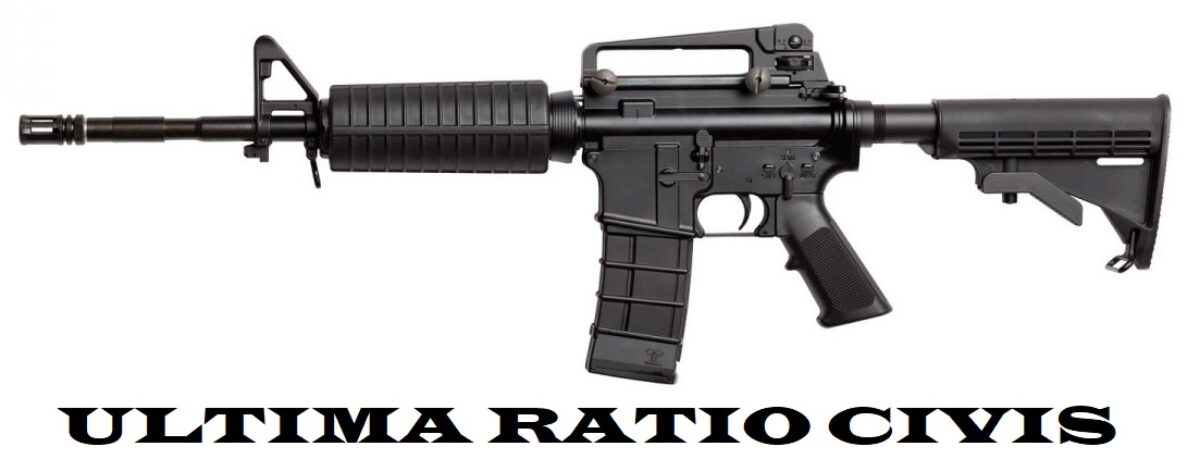
Well, when you can get an AR in 5.56 NATO that’s not much larger than a Subgun in 9mm, or even .45 ACP…
The sad death of the sub-machine gun

These iconic, sometimes crude, weapons are increasingly rare on today’s battlefields
There’s a tendency when looking back at the weapons we first carried into battle to remember them with a certain affection. Mine was a sub-machine gun: compact, purposeful and, at the time, entirely suited to the environment in which I expected to fight – in a tank.
With its stubby barrel, distinctive curved magazine and folding stock, my little Sterling was perfect for the confined, unforgiving interior of an armoured vehicle. Folded down, it could be stowed almost anywhere – behind charge bins, tucked into corners, ready when needed, invisible when not. It was, in every sense, a practical tank soldier’s tool.
In those days, the logic behind the sub-machine gun was sound. Close quarters demanded speed, volume of fire and manoeuvrability. If you were forced to dismount under fire, or if the enemy got too close to your vehicle, you needed something you could use instantly. The SMG did exactly that. It wasn’t elegant, but it didn’t need to be. It was brutally effective within its limits.
In the hands of resistance fighters during the dark years of the Second World War, weapons such as the Sten gun became instruments of defiance. Crude and often hastily manufactured, yet devastatingly effective in ambush and close-quarter engagements, they allowed irregular forces to strike with speed and then vanish into the shadows. There is little chivalry in that kind of warfare, but there is resolve; and the sub-machine gun, in that context, became almost symbolic of that resolve.
Unsurprising then, that it also became associated with organised crime. Tommy gun-wielding 1920s gangsters found much to admire in its qualities: concealability, controllable automatic fire, and an unmistakable capacity for intimidation. It is a reminder, if one were needed, that tools of war are morally neutral; their character is entirely defined by those who wield them.
Yet if there is a moment when the sub-machine gun achieved something approaching professional reverence, it was during the 1980 Iranian embassy siege in London. When the SAS executed their assault – swift, decisive, and meticulously controlled – they did so armed with the MP5, a weapon that had, by then, refined the sub-machine gun concept to its zenith. What unfolded over those brief, violent minutes was not chaos, but choreography: precise entries, disciplined fire and an almost clinical application of force.

SAS troopers carry MP5 sub-machine guns as they enter the Iranian Embassy to end a six day siege in Central London, 1980 Credit: PA
But modern soldiers are no longer facing lightly equipped adversaries. The widespread adoption of advanced body armour, incorporating hardened ballistic plates, has fundamentally altered the dynamics of small-arms engagements. Pistol-calibre rounds, the lifeblood of the SMG, simply lack the velocity and energy required to defeat that protection reliably. In operational terms, that’s critical. A weapon that cannot neutralise a threat when it must is not just limited, it’s potentially dangerous to the man carrying it.
Range, too, has become a defining factor. Contemporary engagements rarely conform to the tight, urban or trench-bound distances of the early 20th century, despite recent reminders from conflicts such as those in Ukraine that close combat has not disappeared. Even there, however, the anticipated resurgence of the sub-machine gun has not materialised in any meaningful way. Soldiers require flexibility, the ability to engage at 50 metres or 300 metres without changing weapon systems. The SMG, by design, cannot offer that.
I recall an incident during the first Gulf War that underscores, in a rather human way, the limitations of relying too heavily on the weapon itself. As a young tank commander, I was armed with both an SMG and a sidearm. After a night attack in which we had overrun an Iraqi armoured position, I encountered what appeared to be a senior enemy officer near my vehicle. Acting on orders, I dismounted and approached him with the intention of detaining him for intelligence purposes.
It was only as I closed the distance that I realised my sub-machine gun was, in effect, useless, with no magazine fitted, no round chambered. My pistol remained holstered but luckily the general was very keen to surrender.
In that moment, the theoretical capabilities of the weapon meant nothing at all. What mattered was perception, intent and, perhaps, the will of the man in front of me. Fortunately, he was more interested in surrender than resistance, and the situation resolved without incident. But it was a stark reminder that a weapon is only ever as effective as its readiness and suitability to the task at hand.
But perhaps that is the point. The sub-machine gun was never meant to be universal. It was a solution, an elegant, ruthless solution to a specific problem. And for a time, in the hands of tank crews, resistance fighters, gangsters and elite soldiers alike, it performed that role with remarkable fidelity.