
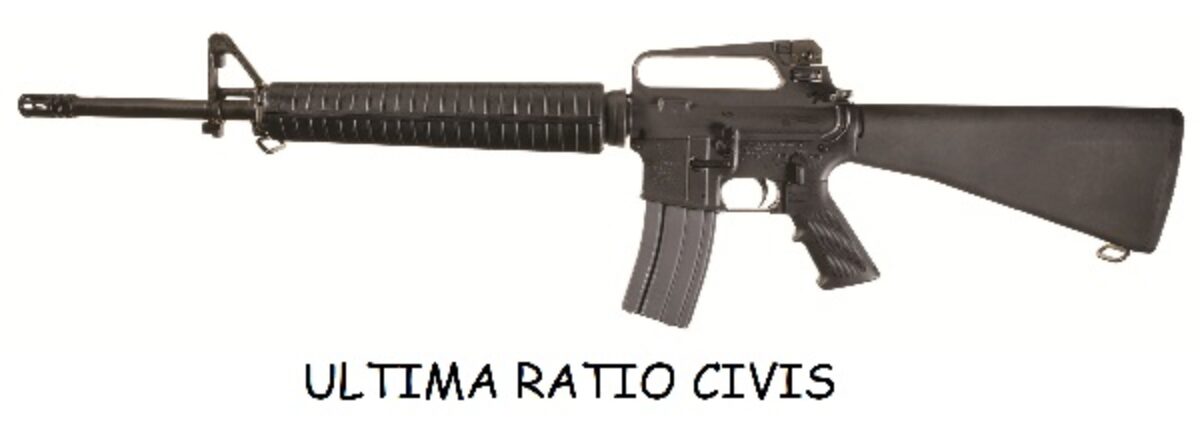
Sometimes it makes you wonder if the DOJ’s Right hand knows what the Left hand is doing.
Supreme Court shrugs off DOJ appeal over gun rights for nonviolent felon
The Supreme Court refused Monday to step into a high-stakes battle over whether nonviolent felons can be banned from owning guns for life, letting a lower court victory stand for a Mississippi man who lost his firearm rights over back child support.
By declining to hear the Department of Justice’s appeal, the high court left intact a ruling by the 5th U.S. Circuit Court of Appeals. That court had overturned the conviction of Edwardham Cockerham, who pleaded guilty to violating a federal law that prohibits felons from possessing firearms.
Cockerham challenged the law after his conviction, arguing that a lifetime ban for a nonviolent offense violated his Second Amendment rights. U.S. Circuit Judge James Ho agreed, drawing a sharp distinction between violent criminals and debtors based on historical context.
“The Government analogizes failure to pay child support to theft. But during the Founding era, thieves were treated differently from debtors,” Ho wrote in the 5th Circuit’s opinion. “Thieves were subject to permanent disarmament. Debtors were not. Debtors could be imprisoned, and thus temporarily disarmed.”
Ho noted that debtors were released from prison once their debts were paid, adding that the government acknowledged Cockerham was no longer delinquent on his child support when he was caught with a firearm. “Cockerham’s conviction under §922(g)(1) violates the Second Amendment,” Ho concluded.
The Justice Department routinely defends existing federal laws regardless of internal policy views, a standard practice highlighted by officials. Harmeet Dhillon, Assistant Attorney General for Civil Rights, noted in an interview with the Daily Caller News Foundation that policy debates belong in the legislature.
“I understand people have policy differences with DOJ’s enforcement of federal laws, but, in my opinion, and I’ve said this to many gun groups, the appropriate place to launch those policy discussions is in Congress, not with us,” Dhillon said. “We have, I mean, not me, but other people in this building regularly respond to all kinds of litigation on behalf of the United States where I don’t necessarily agree with what we’re defending.”
Legal experts tracking gun rights cases viewed the Supreme Court’s refusal to take the case as a potential signal of its current legal direction, particularly following its 2024 ruling in United States v. Rahimi.
“SAF was happy to hear the Supreme Court declined to review this case, as the Fifth Circuit reached the correct ruling: dangerousness must be the standard for disarmament, and many nonviolent felons are not dangerous,” Konstadinos Moros, Director of Legal Research and Education for the Second Amendment Foundation, told the DCNF. “That includes Mr. Cockerham, whose crime was failing to pay child support.”
However, Moros cautioned against reading too much into the Supreme Court’s procedural move.
“To be clear, the Supreme Court refusing to review a particular case does not necessarily mean the Court agrees with the lower court’s decision, so we should not treat this as definitive,” Moros said. “Still, it is a possible sign that the high court is sticking closely to what it decided in Rahimi — actual dangerousness is required to deny a citizen their Second Amendment rights. The upcoming ruling in US v. Hemani should shed more light on this.”
More clarity on the court’s stance may emerge soon. The Supreme Court is currently weighing United States v. Hemani, a separate case out of the 5th Circuit involving a federal ban on firearm possession by drug users or addicts. The justices heard oral arguments in that case in March, and a decision is expected shortly.