
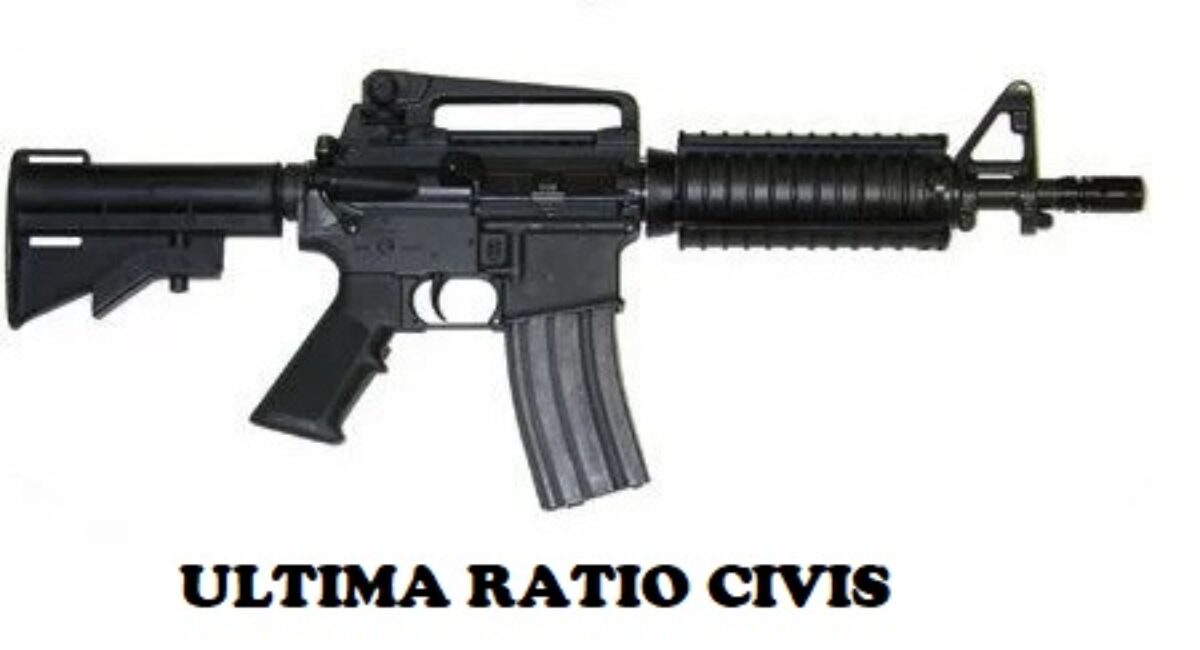
Well, they ain’t Santa Claus; But
A 2A Lawyer Says the ATF’s Anti-Gun Wing Is Keeping a List
The registration-free suppressor you carry out of the shop today could become a federal headache the day the political winds in Washington shift. Here’s the actual exposure — and the three things that might blunt a “revenge tour.”
He’s transparent that he’s relaying what he’s being told, not reporting a confirmed plan, and he allows that it may amount to nothing. But strip away the “revenge tour” branding and the underlying legal exposure he’s describing is real, specific, and worth understanding before you assume the fight is won.
The attorney is careful to say this isn’t the whole agency. Any organization the size of ATF or DOJ contains a spectrum — genuinely pro-Second Amendment people, genuinely hostile ones, and a lot of career staff in between. His warning is aimed at the hostile wing, which he says is unhappy with the direction the agencies have taken under the current administration and is telling people it intends to act on the suppressor free-for-all once re-empowered.
His blunt framing: they won’t care what the guidance said, and they won’t care much what some judge ruled. Even a case they ultimately lose still costs the defendant years and a fortune in legal bills. As the old courthouse adage goes, you can beat the rap, but you can’t beat the ride. “The process is the punishment,” he says — and there would be a lot of process to go around.
How we got here: a $0 stamp, a Texas injunction, and a Form 4473
Some context for why any of this is even possible. The One Big Beautiful Bill Act, signed July 4, 2025, zeroed out the NFA transfer and making tax on suppressors, short-barreled rifles, short-barreled shotguns, and AOWs effective January 1, 2026. Crucially, it didn’t remove those items from the NFA — it just set the tax to zero.
That set up the real earthquake. In Silencer Shop Foundation v. ATF, a federal judge in the Northern District of Texas held that once the tax hits zero, the registration-and-approval machinery bolted onto it loses its constitutional footing. The injunction took effect at 12:01 a.m. on August 13, 2026, and the Trump DOJ declined to appeal. For covered buyers, suppressors now move like ordinary guns: a 4473, a background check, and out the door — no Form 4, no fingerprints, no wait. (For the backstory on the lawsuit that got us here, see our earlier coverage of why Silencer Shop went after the ATF and DOJ.)
Here’s the catch the attorney is circling. That relief is party-limited. Under the Supreme Court’s ruling reining in nationwide injunctions, the order protects the named plaintiffs, members of co-plaintiff groups like GOA and FRAC, and covered Silencer Shop customers — not the whole country. Coverage follows the plaintiffs, not your zip code. There is no statute and no ATF rule codifying the over-the-counter process. It rests on a single district-court order, a favorable DOJ that won’t always be in charge, and a constitutional theory a future administration will be eager to relitigate in another circuit.
The reason the warning exists is that we’ve watched enforcement intensity swing with the change of administrations every 4 years. Under the Biden administration, ATF’s “zero tolerance” inspection policy drove FFL license revocations from a handful a year to record highs — from single digits in 2021 to well over 100 a year in 2023 and 2024, in many cases over paperwork. The current DOJ rescinded that policy in April 2025, stood up a Second Amendment Task Force, and by 2026 had folded it into a broader package of pro-gun rule changes.
Same statutes. Same forms. Wildly different posture — entirely because the leadership changed. And when ATF wants to turn enforcement on ordinary owners, it has shown it will: recall the agency’s mass Form 1 disapprovals aimed at homemade silencers. Now apply that swing to the several hundred thousand people who took possession of unregistered suppressors during a specific window, and you understand why the attorney’s sources think there’s a target-rich environment waiting.
Three things stand between gun owners and a revenge tour
To his credit, the attorney doesn’t just sell fear. He lays out three variables that could blunt any future crackdown — and each is worth watching.
Guidance with teeth, or guidance full of loopholes. If ATF eventually issues guidance or rulemaking with hard, bright-line goalposts — do X, Y, and Z, and you’re clear — that’s a wall a future enforcer has to climb. If instead the guidance is vague and interpretation-laden, that same ambiguity becomes a weapon. SBRs already illustrate the danger. Even under the injunction, short-barreled rifles and shotguns can’t go over the counter, because a separate Gun Control Act provision — 18 U.S.C. § 922(b)(4) — independently bars dealers from transferring them without Attorney General authorization, and nobody has cleanly replaced the old Form 4 as that authorization. Suppressors aren’t on that list, which is why they move, and SBRs don’t. It’s a live reminder that the legal ground here is uneven and unfinished.
The “legal red rover” problem. His second point is a numbers game. Remember red rover as a kid: if enough runners charge the line at once, it breaks; if only a few go, it holds. If only a handful of people had done registration-free transfers, they’d be easy to pick off one by one. But suppressor sales are surging, and if hundreds of thousands of otherwise law-abiding owners are all standing in the same spot, retroactive enforcement starts to look close to too-big-to-prosecute. That doesn’t guarantee anyone’s safety, and the government can still make examples of individuals — but mass, retroactive enforcement is a very different political and logistical animal than a few isolated cases.
The regulators. Third, the officials who set the rules — federal and state alike — function as a check. When state attorneys general and federal regulators put out official, on-the-record guidance telling citizens this is lawful and here is how you do it, that creates a paper record that’s hard to walk back later. A combination of state and federal cover, he argues, is one of the bigger obstacles a revenge tour would have to clear.
What a careful gun owner does now
None of this is legal advice, and the attorney is emphatic on that point — he’s a lawyer, not your lawyer, and you should talk to competent local counsel before making any move. But the practical takeaways write themselves. If you’re buying under the injunction, keep your proof of coverage — your membership card or the plaintiff-company purchase record — with the suppressor. Understand that the order didn’t touch 26 U.S.C. § 5861(j), so moving an unregistered can across state lines is its own separate exposure. And watch for the thing that would actually lock this in: real ATF guidance or rulemaking, not just a favorable court order a future administration can attack from a different angle. (For the upside case — what a genuine, durable win looks like — see what gun owners should expect after real NFA reform.)
The attorney closed his video with a line from the Federal Farmer essays of 1788 — traditionally attributed to Richard Henry Lee, though some historians now credit Melancton Smith: “To preserve liberty, it is essential that the whole body of the people always possess arms and be taught alike, especially when young, how to use them.”
Two and a half centuries later, the people still possess the arms. The open question his sources are raising is whether some faction inside the federal government is quietly writing down the names of everyone who exercised that right the moment it got easy.