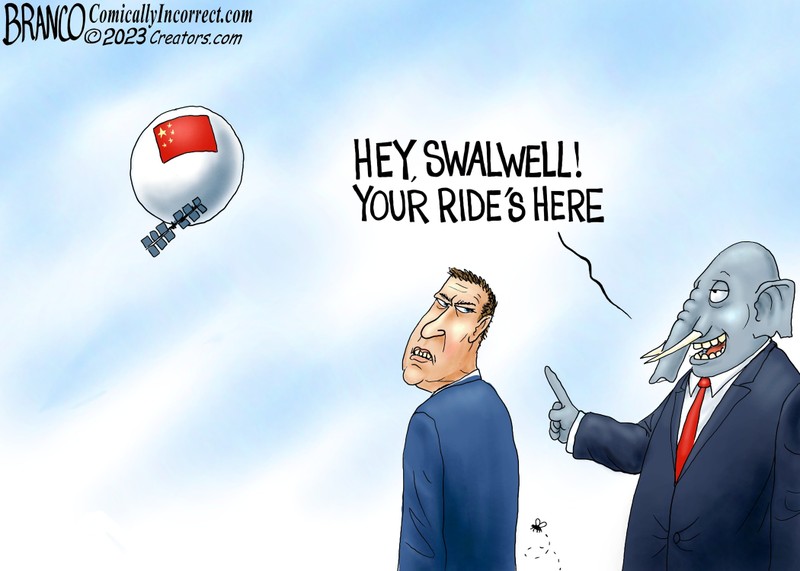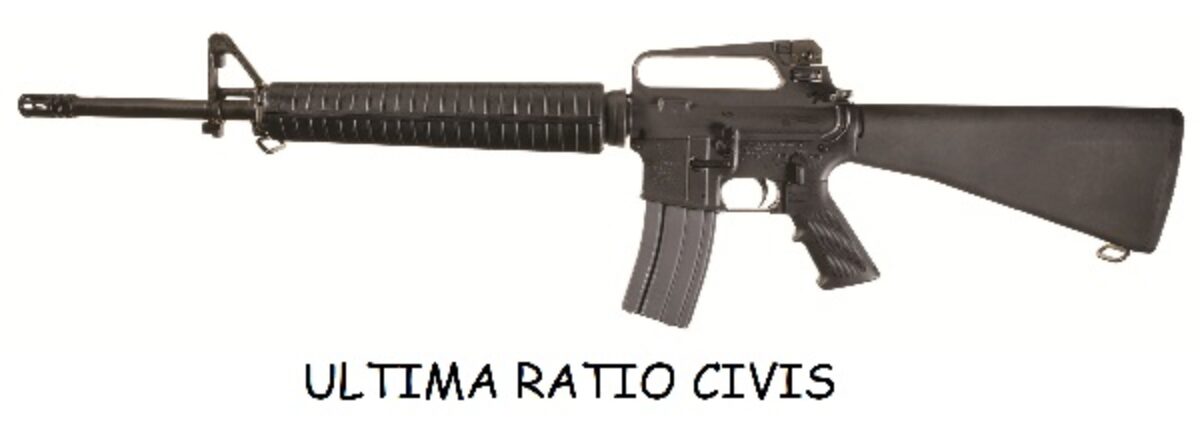
Elitist snobs from New York always think the land between the coasts is populated by nothing but hicks and cows

As the Wyoming Legislature considers several bills that would make it easier to carry firearms in public spaces, there’s evidence that those practices make things worse, a gun control advocate said.

“We’ve seen things like guns routinely being left in bathrooms on campuses,” Andy Pelosi told Cowboy State Daily.

As executive director of The Campaign to Keep Guns off Campus, which is based in New York State, Pelosi was answering what he claims are flawed arguments from Wyoming concealed-carry advocates who have said that the loosening of concealed carry restrictions in other states hasn’t caused problems.

Causes More Problem Than It Solves?

Allowing firearms on college campuses has led to problems and even some tragedies, Pelosi said. That has included more suicides or perpetrators using firearms to force sexual assaults.

He cited some studies his group has compiled from reports of gun-related incidents on campuses, including Colorado State University. Concealed carry is allowed at CSU.

It generally isn’t allowed on the University of Wyoming Campus. Students or staff may carry at UW only if they’ve obtained a special permit from university police for some pressing reason, such as being stalked.

Some of the incidents in Colorado that Keep Guns off Campus cites include student gunshot suicides in 2008 and 2017 and an accidental shooting on the CU-Denver campus in 2012.

And in 2017 at Fort Collins Community College, “A 26-year-old female student pulled a loaded gun on her professor after he confronted her about cheating,” according to one of the studies cited.

Overall, allowing guns on campuses and other previously gun-free public spaces isn’t shown to diminish crime, but instead increases the number of incidents such as suicides, threats and accidental shootings, Pelosi said.

The Associated Students of the University of Wyoming opposes allowing concealed carry on campus, the group’s representative, Caitlin Heddins, told legislators during a recent discussion of one of the firearms-related bills.


Still A Good Idea, Some Say

However, advocates for the bills – House Bill 105 and Senate File 135 – argue that it violates the Second Amendment rights of Wyoming residents to not allow concealed carry into government buildings, government meetings and the like.

They contend that gun-free zones simply create “soft targets” for mass shooters or others with ill intent.

New ‘Capitol Carry’ Bills 

A pair of new bills introduced to the Wyoming Senate on Monday would help allow concealed carry in the Wyoming Capitol building, where civilians are now prohibited from having firearms.

Senate File 149 would create an “enhanced concealed carry permit.” The current Wyoming concealed permitting process does not require applicants to take any actual firearms handling or live-fire training. Instead, they take only classroom or online courses.

Under the bill, those regular concealed carry permits would still be available. But for people wishing to take it to another level, enhanced concealed carry permit training would entail hands-on firearms safety courses, as well as live-fire training and qualification sessions.

Under Senate File 150, people who had obtained the enhanced concealed carry permits would be allowed to concealed carry their firearms in the Capitol.

Yet, he has no real solutions either

All-or-nothing approaches to firearm safety have gotten us nowhere

Data scientists seek to glean insights from data that can place issues of public concern into the appropriate perspective.

That being said, my recent op-ed in The Hill, “What the data actually say about assault weapons” fueled discussion that was more revealing about the state of semi-automatic rifles (or assault weapons, or tactical rifles or modern sporting rifles as they are known by some) than the data itself.

One group of respondents were concerned that I was against such weapon bans. These people cited horrible incidences associated with these weapons, and that the only way to stop such egregious acts would be through banning them completely. Some argued that these weapons had no place in society, that they were military weapons.

Another group expressed concern that these weapons were mislabeled and misrepresented by the media. They argued that such firearms are widely used by hunters and for self-defense. These also cited the right to own any firearms, based on their understanding of the Second Amendment.

Then there was a third group of people who simply appreciated anyone reporting data that shed some light on firearm deaths in society in general. They also offered that some sectors of the media are highly selective in what they report about such weapons, to achieve a particular objective.

The takeaway from all these responses is not whether these weapons should be banned, but rather, how contentious the issue is and how far apart the different stakeholders lie in their views.

Although there were a wide spectrum of perspectives, two diametrically opposed positions emerged: either ban or do not ban such weapons.

When comparing the issues cited within each position, it has become abundantly clear that the solution is not an on/off switch, but rather, a dial that moves between the two extremes.

What does such a dial look like?

It permits access to such weapons, while providing restrictions that reduce risk in certain environments and under certain circumstances. Therefore, the focus is not on bans but on limitations. This is how universal background checks can play a role, which focus on the people rather than the weapons.

The challenge with such a nuanced policy is that both positions will be unhappy.

By metaphor, when a person drinks and drives, killing innocent people, is the seller of the alcohol held liable? No, although alcohol is a controlled substance with restrictions, like minimum age to purchase.

Is the automobile manufacturer held liable? No, although automobiles are designed with federally mandated safety features.

The person who drank and drove is held liable, and laws are designed to penalize and deter the perpetrators’ behavior. However, no laws exist that will end deaths due to drunk driving.

The schisms between the two positions means that little common ground exists.

A risk and benefit analysis for any activity or item is revealing. When benefits exceed risks, we tolerate the activity or item and place safeguards to reduce risk. When risks exceed benefits, we either ban the activity or item, or place significant restrictions to reduce risk. That is how automobile travel, air travel, prescription drugs and numerous other activities and items are evaluated and managed.

With firearms of any type, both positions understand that there are risks. Where they most significantly differ is on the perceived benefits. The mismatch of what constitutes benefits with any firearms appears to be the stumbling block in the conflict.

Given this environment, the status quo with firearm deaths will continue, with suicides the single largest subset. Mass killings and mass shootings will continue to represent around 2 percent of all deaths, garnering the most attention, even though they account for a small fraction of firearm fatalities. Note that all such needless and avoidable deaths do not diminish their tragedy, particularly for those directly impacted. It just recognizes their relative number compared to all firearm deaths.

No one supports inappropriate and unsafe use of firearms that lead to avoidable deaths. Everyone can agree on that point. What cannot be agreed upon is how to achieve that.

If our society wishes to eliminate all automobile deaths, cars must be banned, an impractical solution given their benefit. Instead, we place restrictions on how automobiles are operated to reduce fatality risk down to levels commensurate with the benefits that they provide.

Can we use the same approach to set sensible firearm policies that are commensurate with their risk and more importantly, on some compromised recognition of their benefits? Such a dialogue can be a first step forward in reducing avoidable firearm deaths, an objective that everyone can agree upon.

Poll: Majority of Americans Oppose ‘Assault Weapons’ Ban

Bans on AR-15s and similar firearms have continued to fall out of favor with the American public.

51 percent of Americans now oppose adopting a national “assault weapons” sales ban, according to an ABC News/Washington Post poll released Monday. That’s a ten-point jump in opposition since the question was last asked in 2019. Only 47 percent said they support the policy. That represents the second-lowest level of support measured since the poll began in 1995.

Those who strongly opposed a nationwide ban also outpaced those who strongly supported it for the first time since 2015.

The results are just the latest to confirm a decreased appetite for the ban. At least three separate polls conducted in 2022 documented a decline in support for the policy, even in the immediate aftermath of the Uvalde school shooting.

The latest results arrive just one day before President Biden (D.) is slated to give his State of the Union Address, where he is likely to reiterate his support for an assault weapon ban. Biden has made an assault weapon ban one of his signature gun policy goals, and he routinely calls for Congress to pass a ban after every prominent shooting–a request his party delivered on in the House last year but not the Senate.

The polling results suggest the public is increasingly turning a deaf ear to those calls.

Pollster David Langer said the decline in support for the gun ban was “broadly based across groups” but could only speculate as to what was driving the drop in support.

“It would take a study focused in more detail on the issue to assess its reasons, but other studies provide clues,” he said in a statement. “In a Pew Research Center poll last year, the public divided on whether or not making it harder to get guns would reduce mass shootings.”

Beyond public opinion souring on the bans, the court system has also started to cast doubt on their constitutionality after the Supreme Court’s decision in 2022’s New York State Rifle and Pistol Association v. Bruen. The High Court vacated a federal decision upholding Maryland’s assault weapons ban shortly after that ruling and sent it back down to the lower courts to be relitigated under the new standard it set. Since then, federal judges have blocked two local assault weapon bans in Colorado, and a state court blocked Illinois’ new ban.

However, that hasn’t stopped lawmakers in blue states from continuing to push for the bans. Illinois joined Delaware in passing the first statewide assault weapons bans in several decades when it adopted its version last year. Lawmakers are also considering new bans in Washington, Rhode Island, Colorado, and New Mexico this year.

Langer Research Associates conducted the ABC News/Washington Post poll by cell phone from January 27-February 1. It sampled 1,003 adults with a margin of error of 3.5 percentage points.

February 7

1301 – Edward of Caernarvon, son of King Edward I (known as Longshanks), later King Edward II of England, is invested by his father as the first English Prince of Wales and heir to the throne.

1497 – In Florence, Italy, supporters of Girolamo Savonarola burn cosmetics, art, and books, in a “Bonfire of the vanities”.

1795 – The 11th Amendment to the United States Constitution is ratified.

1812 – The strongest in a series of earthquakes that began the previous December, strikes New Madrid, Missouri.

1894 – The Cripple Creek miner’s strike, led by the Western Federation of Miners, begins in – you guessed it – Cripple Creek, Colorado.

1900 – A Chinese immigrant in San Francisco falls ill to bubonic plague in the first plague epidemic in the continental United States.

1904 – A fire begins in Baltimore, Maryland, destroying over 1,500 buildings in 30 hours.

1943 – Imperial Japanese Navy forces complete the evacuation of Imperial Japanese Army troops from Guadalcanal, ending attempts to retake the island.

1962 – The United States bans all Cuban imports and exports.

1979 – The body of fugitive war criminal, Josef Mengele is found in the waters off the coast of Bertioga, Brazil, purported drowned after suffering a stroke while swimming.

1984 – On Mission STS-41-B,  aboard Shuttle Challenger,  Astronauts Bruce McCandless II and Robert Stewart make the first untethered space walk using the Manned Maneuvering Unit (MMU).

1991 – USAF Air Combat Victories: Rick Parsons-1 SU-7, Randy May-1 Mi-24, and Anthony Murphy-2 SU-22s

1992 – The Maastricht Treaty is signed, leading to the creation of the European Union.

1995 – Ramzi Yousef, the mastermind of the 1993 World Trade Center bombing, is arrested in Islamabad, Pakistan.

2001 – Space Shuttle Atlantis is launched on mission STS-98, carrying the Destiny laboratory module to the International Space Station.

2013 – Mississippi officially ratifies the 13th Amendment, becoming the last state to approve it after Mississippi in 1995.

2016 – North Korea demonstrates it ability to launch to orbit by launching the Kwangmyŏngsŏng-4 reconnaissance satellite, in violation of multiple UN treaties.

Man dead in shooting at Randall dog park in Yakima

A man shot and killed another man who threatened his child on Sunday afternoon at the Randall dog park in Yakima, police said.

Multiple people called 911 around 2:30 p.m. to report a man was acting erratically at Randall dog park, 1399 S. 48th Ave., according to a Yakima Police Department news release.

The man, later identified as Daniel Ortega, 22, of Yakima was interacting with another man and his child at the park, and “attempted to endanger the life of the small child with his words and actions,” the police news release said.

The father told Ortega to leave his family alone, and attempted to leave the park, the release said. When his attempts to de-escalate the incident failed, the 28-year-old Yakima man “discharged his legally owned firearm in defense of himself and his child,” the release said.

The man who fired the weapon was protecting himself and his son, and was not the aggressor, said Yakima police Capt. Shawn Boyle. Ortega and the man didn’t appear to know each other and Ortega died at the scene, Boyle said.

The 28-year-old man cooperated with detectives, and interviews with witnesses corroborated his account, the release said.

After consultation with the Yakima County prosecutor, police released 28-year-old, the news release said.

The Washington State Patrol and Yakima County sheriff’s deputies also responded.

It was the second homicide investigation in less than 24 hours for Yakima detectives. They responded to a home invasion shooting early Sunday morning on East Beech Street.

Randall Park, which is a distance away from the dog park and separated by a creek, remained open

February 6

1778 –In Paris, the Treaty of Alliance, and the Treaty of Amity and Commerce are signed between the United States and France

1788 – Massachusetts becomes the sixth state to ratify the United States Constitution.

1820 – The first 86 African American immigrants sponsored by the American Colonization Society depart New York to start a settlement in  Liberia, Africa

1899 – The Treaty of Paris between the United States and Spain, is ratified by the United States Senate officially ending the Spanish American War.

1919 – The American Legion is founded.

1922 – The Washington Naval Treaty is signed in Washington, D.C., limiting the naval armaments of United States, Britain, Japan, France, and Italy.

1951 – Travelling at 50 mph, twice the speed limit for the location under repair construction, The Broker # 733, a Pennsylvania Railroad passenger train, derails on a curve near Woodbridge Township, New Jersey, killing 85 passengers and injuring over 500 more. The wreck is still to date one of the worst rail disasters in American history.

1952 – Elizabeth II becomes Queen of the United Kingdom and her other Realms and Territories and Head of the Commonwealth upon the death of her father, George VI. The longest reigning monarch, so far, of the UK.

1959 – Jack Kilby of Texas Instruments files the first patent for an integrated circuit.

1976 – Lockheed Corporation president Carl Kotchian,  in testimony before a Senate subcommittee, admits that the company had paid out around $3 million in bribes to the office of Japanese Prime Minister Kakuei Tanaka.

1978 – The Blizzard of 1978, one of the worst Nor’easter storms in New England history, hits the region, with sustained winds of 65 mph and in snowfall of 4 inches an hour, dropping from 20 to 27 inches of snow over the region and causing the deaths of over 100 people.

1991 – Over Iraq, USAF Pilots Thomas Dietz and Bob Hehemann, each flying F-15 fighters, shoot down 2 MiG-21s and 2 SU-25s. USAF Pilot Robert Swain, flying an A-10 attack jet, shoots down a Messerschmitt B0-15 helicopter and USN pilots Stuart Broce and Ron McElraft flying an F-14 fighter shoot down a Mil Mi-8 helicopter.

1998 – Washington National Airport is renamed Ronald Reagan National Airport.

2018 – SpaceX’s Falcon Heavy, a super heavy launch vehicle, makes its maiden flight.

Moderna Booster Vaccine Singled Out for Chronic Hives
— Chronic spontaneous urticaria more frequent when compared with Pfizer’s mRNA vaccine

The monovalent Moderna COVID-19 booster vaccine may be associated with an elevated risk for new-onset chronic spontaneous urticaria (CSU), or hives lasting more than 6 weeks, according to a Swiss study.

Among people who got an mRNA COVID vaccine booster and had new-onset hives reported to local allergists, 90% had vaccination precede CSU in the canton of Vaud during the study period, as did 81% of patients in the nationwide cohort, reported Yannick Daniel Muller, MD, PhD, of the University of Lausanne in Switzerland, and coauthors.

Crude incidence rates of CSU following a booster dose in the two cohorts was 1.9-2.1 per 100,000 doses of Pfizer’s vaccine and 30.8-43.9 per 100,000 doses of Moderna’s product, according to their research letter in JAMA Network Openopens in a new tab or window.

This difference translated to a relative risk with the Moderna booster dose of 20.8 (95% CI 6.5-66.0) for the Vaud cohort of 80 people, and 16.1 (95% 10.8-24.0) in the Swiss cohort of 782 individuals.

“These data should not discourage patients from being vaccinated,” Muller’s group concluded. “However, guidelines defining the eligibility and dosing for upcoming mRNA-based boosters are needed for patients with CSU after an mRNA-based COVID-19 vaccine.”

The reason behind the possible association are unclear, and warrant further study, according to the study authors.

“As a potential contributing mechanism warranting further investigations, our group previously showed that the Moderna vaccine had a greater association with positive skin and basophil activation tests results compared with the Pfizer-BioNTech vaccine,” wrote Muller and coauthors.

“Alternatively, with the Moderna vaccines containing a higher dose of mRNA and being more immunogenic than the Pfizer-BioNTech vaccine, one could speculate that the booster non-specifically triggered CSU in predisposed individuals,” they added.

Notably, the current bivalent boostersopens in a new tab or window from Moderna and Pfizer were introduced in late 2022, after the conduct of the present study. After their introduction in the U.S., the original monovalent products were phased out for booster doses.

Just last week, the Vaccines and Related Biological Products Advisory Committee unanimously endorsed the FDA’s plan to harmonize COVID-19 primary and booster vaccines to contain a bivalent compositionopens in a new tab or window with components targeting BA.4/5 and the original SARS-CoV-2 strain, meaning the original monovalent products will be eliminated from the market altogether going forward.

For their study, the researchers estimated the incidence of vaccine-related CSU locally in Vaud and nationally across Switzerland, where 3,278,808 and 298,813 individuals, respectively, had received a COVID mRNA booster dose from Dec. 1, 2021 to Aug. 31, 2022.

Eligible patients were identified by local allergists and sent an online questionnaire from the Lausanne University Hospital from April to August 2022.

The participating Vaud cohort was 70% women, with an average age of 41 years. The national cohort was 58% women and their average age was 39 years. In Vaud, 14% of participants reported previous experiences of urticaria and 95% reported taking antihistamines, the majority daily.

Limitations of the study include the lack of available Swiss data regarding CSU incidence within the general population. Moreover, confounding factors tied to the Omicron variant of COVID-19 could affect the findings, as 31% of CSU-Vaud cohort members reported infection. Also, incidence rates could not be adjusted, as individual data on vaccine brand tied to age and sex were not unavailable.

Live long and prosper. If they will let you.
Longer lives, society, and freedom.

Longer, healthier lives: A disaster for humanity? To hear some people talk, yes.

Harvard aging researcher David Sinclair has managed to regulate the aging process in mice, making young mice old and old mice young. And numerous researchers elsewhere are working on finding ways to turn back the clock.

This has created a good deal of excitement. We’ve seen these waves of antiaging enthusiasm before: There was a flurry of interest in the first decade of this century, with news stories, conferences, and so on. That enthusiasm mostly involved activating the SIRT-1 gene, which is also activated by caloric restriction.

You can buy supplements, like resveratrol or quercetin, that show some evidence of slowing the aging process by activating that gene, or by killing senescent cells. Drugs like rapamycin and metformin have shown promise as well. And diet and exercise do enough good that if they were available in pill form, everyone would be gobbling them.

But while pumping the brakes on the process of getting older and frailer is a good thing, being able to actually stop – or better yet reverse – the process is better still. If I had the chance, I’d be happy to knock a few decades off of my biological age. (Ideally, I think I’d be physically 25 and cosmetically about 40.)

But does this mean we’re looking at something like immortality? Well, not really.

Even a complete conquest of aging wouldn’t mean eternal life. Accidents, disease, even death by violence will still ensure that your time on Earth – or wherever you’re living in a century or two – eventually comes to an end. Still an end to, or even a dramatic delaying of, the process of decay and decline would be nice. As Robert Heinlein observed in the 1950s, you spend the first 25 years of your life getting established, then the next couple of decades striving to get ahead, and then by age 50 your reward for all that is that your middle is thickening, your breath is shortening, and your aches and pains are accumulating as the Grim Reaper waits around the corner.

Continue reading “”

Does Birdshot Overpenetrate? Home defenders sometimes opt for birdshot, thinking it won’t overpenetrate. We put this concept to the test.

“I’ll just use birdshot.”

I hear it all the time when people talk about shotguns and overpenetration. It’s as if there is nothing to debate, as if there is only one type of birdshot. Rather than use buckshot—which is proven to be a better defensive option—they cling to the notion that birdshot will magically stop at certain barriers.

While it’s entirely possible folks like us overthink this stuff, that’s what we do here at SI. So, let’s part the weeds and delve in.

First, what exactly is birdshot?
Traditionally the term means any low-brass (or standard-velocity) shell containing small shot sizes of around No. 8. Plenty of hunters shoot small upland birds with Nos. 6, 7.5 and even 9 shot, but No. 8 tends to be the most popular. Why? It’s likely because quail and dove hunters find it to be the best combination of energy vs. pattern density for taking these flighty creatures at common wingshooting distances (10 to 40 yards).

Regarding 12-gauge birdshot loads, typically they come in two versions: 2 3/4-inch “light” 1-ounce loads and 2 3/4-inch “heavy” 1 1/8-ounce loads, although you can often find even heavier 1 1/4-ounce, No. 6 shot loads commonly used for squirrels and pheasants. The weight refers to the amount of shot, or payload, each shell contains. As with all ammunition, the more massive the payload and the faster it goes, the more damage it does to the target.

Why Birdshot for Home Defense?
The main reason given for opting for birdshot over buckshot is because birdshot isn’t as powerful downrange. (After all, buckshot is called buckshot because its load of nine, .33-inch-diameter pellets are each individually capable of killing a deer out to 50 yards or so.) The theory is that birdshot will stop an attacker near the end of the sofa, but won’t blow through both sides of a sheetrock wall and accidentally injure a family member on the other side. But, is that true?

Recently I tested an average, 1-ounce, No. 8 load against an insulated, sheetrock wall using cylinder choke. Here’s what I found:

At 20 yards, No. 8 shot did not penetrate both sides of the wall. At 10 yards it penetrated the wall and went on to strike a cardboard mannequin wearing a T-shirt. The pellets only made slight indentations in the cardboard, indicating it would likely not cause severe harm to a human. At 5 yards it penetrated both sides of the wall and the cardboard mannequin. Now, unless your last name is Bezos, you’re unlikely to have a 20-yard stretch in your house; 5 yards is far more common for a defensive distance in the home. Knowing this, do you still think birdshot won’t pose a danger?

Continue reading “”

1 dead after alleged home invasion near Bullard

SMITH COUNTY, Texas (KLTV) – A homeowner allegedly shot a man who is accused of unlawfully entering his house and threatening his fiancé.

At approximately 11:30 a.m. Saturday, Smith County deputies were dispatched to the 15,000 block of Treasure Cove near Bullard in reference to a suspicious person, according to a release from Smith County Sgt. Larry Christian. While en route to the location, deputies were informed that a white male had entered a residence unlawfully and confronted the homeowners, insisting that the homeowner’s truck belonged to him, Christian said. The homeowner reportedly forcefully removed the intruder from his residence and was able to lock the door.

Before deputies arrived, the homeowner, armed with a shotgun, went outside to check on his truck; the suspect then returned to the property and the homeowner informed him that police were on the way and instructed him to sit down, the release said. The homeowner reported that he believed the suspect was having a mental episode, as he was shouting an unknown female’s name. During this time, the homeowner’s fiancé came outside, and her presence seemed to agitate the suspect, who came toward them aggressively, according to Christian. The homeowner reportedly warned the suspect several times to stop walking toward them or he would shoot, but the suspect allegedly refused and made death threats toward them; as the suspect charged toward the homeowner and his fiancé, the homeowner shot the suspect once in the chest, Christian said.

Upon arrival of deputies, the suspect was found unconscious in the front yard of the residence. Deputies initiated CPR on the suspect prior to the arrival of EMS. UT Health East Texas Paramedics arrived on location a short time later and confirmed the suspect was deceased, according to the release. Smith County Investigators and the Crime Scene Unit responded to the location and are currently conducting their investigation. Christian said the suspect has been identified as 50-year-old Mark Anthony Correro of Houston, Texas.

Precinct 2 Justice of the Peace Andy Dunklin arrived on location for the inquest. He ordered an autopsy and the body was transported to Forensic Medical in Tyler.

This is an ongoing investigation and more details may be released as they become available.


UPDATE: Intruder shot and killed at Fort Smith home

FORT SMITH, Ark. (KNWA/KFTA) — UPDATE: Feb. 4 Police have identified the 29-year-old male who was killed as Jacob Andrew Webb.

Jacob Andrew Webb, 29 was killed trying to break into a 58-year-old man’s home (Fort Smith Police Department).
The investigation is still ongoing, according to Fort Smith Police.

FORT SMITH, Ark. (KNWA/KFTA) — UPDATE: 10:57 a.m. Police say a man shot and killed an intruder trying to enter his home near the corner of 18th and N H streets.

Police identified the homeowner as a 58-year-old male and the victim as a 29-year-old male. The homeowner was taken to the hospital for non-life-threatening injuries.

Police believe this to be an isolated incident with no danger to the public.

February 5

1576 – Henry of Navarre rejects Catholicism at Tours, France and rejoins the Protestant forces in the French Wars of Religion.

1597 – A group of Japanese Christians are killed by the new government of Japan for being seen as a threat to Japanese society.

1849 – University of Wisconsin–Madison’s first class meets at Madison Female Academy.

1862 – The voivode of Moldavia and the warlords of ancient Wallachia formally unite to create the Romanian United Principalities with Alexandru Cuza as Domnitor.

1907 – Belgian chemist Leo Baekeland announces the creation of Bakelite, the first synthetic plastic.

1918 – West Plains, Missouri native, Lt. Stephen W. Thompson, flying with a French squadron as a bombardier/gunner, shoots down a German Albatros D.III over Saarbrucken, the first aerial victory by the U.S. military.
The British Anchor Line SS Tuscania is torpedoed off the coast of Ireland, the first ship carrying American troops to Europe to be torpedoed and sunk.

1919 – Charlie Chaplin, Mary Pickford, Douglas Fairbanks, and D. W. Griffith launch United Artists.

1924 – The Royal Greenwich Observatory begins broadcasting the hourly time signals known as the Greenwich Time Signal.

1958 – Off Tybee Island near Savannah, Georgia, a US F-86 fighter collides mid-air with a US B-47 bomber carrying a Mark-15 thermonuclear bomb. While there are no fatalities or injuries, the crew of the bomber jettisons the bomb,  which has never been recovered, into the water near Wassaw Sound

1971 – Apollo 14 Astronauts Alan B. Shepard Jr. and Edgar D. Mitchell undock from the Command Module Kitty Hawk piloted by Stuart Roosa and land the Lunar Module Antares on the Frau Mauro highlands on the mission originally planned for Apollo 13.

1985 – Ugo Vetere, the mayor of Rome, and Chedli Klibi, the mayor of Carthage meet in Tunis to sign a treaty of friendship officially ending the 3rd Punic War which lasted 2,131 years.

1988 – Panamanian military dictator Manuel Noriega is indicted by federal grand juries in Miami and Tampa on drug smuggling and money laundering charges, eventually leading, in large part, to the U.S. invasion of Panama in late 1989.

2008 – A major tornado outbreak of 87 tornadoes across the southern U.S. and the lower Ohio Valley kills 57 people across four states and 18 counties, with hundreds of others injured.

2020 – President Donald Trump is acquitted by the United States Senate in his first impeachment trial.

Store Owner Shoots, Kills Suspect During Attempted Armed Robbery in East Hartford

One suspect in an attempted armed robbery in East Hartford is dead after a store owner who was shot during the ordeal shot back, according to police.

Police said two people wearing black ski masks went into Humble & Paid Co. at 1285 Main St. just after 10:30 p.m. Thursday, intending to rob the business.

The store owner struggled with one of the suspects, who pulled out a firearm and the suspect shot the owner in the back, police said.

The owner returned fire with two of his legally registered firearms, striking one of the suspects several times, according to police.

Officers who responded treated the suspect, identified as 26-year-old Jashar Haslam of Hartford, until the East Hartford Fire Department arrived and the suspect was transported to a hospital, where he was pronounced dead, police said.

The owner was also treated at the scene for a gunshot wound to the lower back and was transported to the hospital. His injuries are not life-threatening, police said.

The other suspect remains at large and ran out of the building during the initial struggle, police said.

Yeah, that’d really cramp the style of the Holiday.

New Mexico: Radical Gun Restrictions on Deck in Committee Next Week: Magazine Limits, Waiting Periods, Semi-Auto, Suppressor & NFA Bans

On Monday, February 6, the New Mexico Senate Health & Public Affairs Committee will hold a public hearing on Senate Bill 171 by Sen. Bill Soules (D-Las Cruces), legislation that attempts to supersede federal law and make it a FELONY to manufacture, sell, transfer, or acquire a firearm sound suppressor and other National Firearms Act items, as well as certain semi-automatic pistols. Please contact members of the Senate Health & Public Affairs Committee and urge them to OPPOSE SB 171. Also, make plans to attend this hearing in-person, on Monday, at 1:30pm, in Room 311 of the State Capitol in Santa Fe, and testify against this misguided proposal. You may also participate in this hearing via Zoom or phone, but the best way to make sure your voice is heard (as the committee almost always decides to limit testimony) is to be present in the hearing room!

ZOOM WEBINAR: https://us02web.zoom.us/j/9124526531
or via telephone at 1 253 215 8782 Meeting ID: 912 452 653

On Tuesday, February 7, the New Mexico House Consumer & Public Affairs Committee will hold public hearings on three extreme gun control proposals:

House Bill 50 by Rep. Patricia Roybal Caballero (D-ABQ) makes it a FELONY to transfer or possess any standard capacity magazine capable of holding 10 or more rounds of ammunition. The 9-round limit would be the lowest in the nation and would effectively ban the use of some of the most popular pistols and rifles purchased and owned by law-abiding New Mexicans.

House Bill 100 by Rep. Andrea Romero (D-Santa Fe) expands New Mexico’s so-called “universal background check” law to include a mandatory 14-day waiting period on all firearm purchases. This criminal protection bill would delay your ability to exercise your Second Amendment right to defend yourself, your family and your property.

House Bill 101 by Rep. Andrea Romero (D-Santa Fe) bans the manufacture, possession, purchase, sale or transfer of countless commonly-owned semi-automatic rifles, pistols and shotguns dubbed “assault weapons” under the act and standard capacity magazines capable of holding more than 10 rounds of ammunition. Current owners would be required to move them out of state, sell them to a federal firearm licensed dealer or surrender them to a law enforcement agency prior to July 1, 2023 – or face FELONY charges.

Please contact members of the House Consumer & Public Affairs Committee and urge them to OPPOSE HB 50, HB 100 & HB 101. Also, make plans to attend this hearing in-person, on Tuesday, at 1:30pm, in Room 317 of the State Capitol in Santa Fe, and testify against this misguided proposal. You may also participate in this hearing via Zoom or phone, but the best way to make sure your voice is heard (as the committee almost always decides to limit testimony) is to be present in the hearing room!

Please click the link below to join the webinar: https://us02web.zoom.us/j/89037370054 
Or One tap mobile: US: +13462487799,,89037370054# or +16694449171,,89037370054# 
Webinar ID: 890 3737 0054 

February 4

1555 – John Rogers is burned at the stake, the first English Protestant martyr under Queen Mary I of England.

1703 – In Edo, Japan, all but one of the  47 rōnin commit seppuku to atone for avenging their master’s death. The one who didn’t had been sent by the band to inform the lord of the area, at his capitol at Ako, of their act before turning themselves in to local authorities, and was later pardoned, but still buried with his companions when he died 44 years later.

1758 – The city of Macapá in Brazil is founded by Sebastião Cabral.

1789 – George Washington is unanimously elected as the first President of the United States by the U.S. Electoral College.

1801 – John Marshall is sworn in as the 4th Chief Justice of the United States.

1825 – The Ohio Legislature authorizes the construction of the Ohio and Erie Canal and the Miami and Erie Canal.

1859 – The Uncial Codex Sinaiticus version of the Bible is discovered in Egypt.

1861 – In Montgomery, Alabama, delegates from the first 6 seceded U.S. states, South Carolina , Mississippi , Florida, Alabama, Georgia and Louisiana, meet in convention to form a new union.

1899 – The Philippine–American War begins with the Battle of Manila, resulting in a U.S. victory with light casualties on both sides.

1941 – The United Service Organization (USO) is created to entertain American troops.

1945 – The Manila Internment Camp on the campus of the University of Santo Tomas in Manila is liberated from Japanese authority by troops of the U.S. Army 44th Tank Battalion.

1967 – NASA launches Lunar Orbiter 3 from Cape Canaveral’s Launch Complex 13 on a mission to identify possible landing sites for the Surveyor and Apollo spacecraft.

1974 – The Symbionese Liberation Army kidnaps Patty Hearst in Berkeley, California.

1976 – In Guatemala and Honduras an earthquake kills more than 22,000 people, leaving over a million homeless.

1977 –  The Lake-Dan Ryan line train, of the Chicago Transit Authority elevated train, rear ends a Ravenswood line train on the northeast corner of the Loop at Wabash Avenue and Lake Street and derails, killing 11 passengers and injuring 180 more, the worst accident in the agency’s history.

1999 – Being mistaken for a suspected criminal, immigrant Amadou Diallo is shot 41 times and killed by plainclothes New York City police officers on an unrelated stake out, who are charged with murder, but acquitted at trial.

2004 – Facebook is founded by Mark Zuckerberg and Eduardo Saverin.